The first cold mornings are coming, and with them the first blocked noses. Chances are that within ten minutes you are hanging over a bowl of hot water with a towel over your head. Steam inhalation for a cold is one of those habits you pick up at home and that almost nobody questions. Does it actually work, and are you doing it safely? Below you can read what warm steam does to your nose, how to go about it step by step, and when you are better off skipping it.
What steam does, and what it does not
Warm, humid air moistens the lining of your nose. You notice that most after a few days of blowing your nose, or after a night with the heating on, when your nose feels dry and crusty. The mucus feels looser afterwards and blowing your nose gets easier.
What steam does not do is shorten your cold. A cold comes from a virus, and steam has no effect on that. The research into steam inhalation for a cold is small in scale and the results contradict each other. Treat it as temporary relief of the feeling, not as treatment.
That is the most honest reason to do it. Sitting still in warm steam for ten minutes feels good when you feel rotten. That is enough.
Steam inhalation for a cold: step by step
- Boil water and then let it stand for five minutes. Boiling water is too hot and mainly brings a scalding risk.
- Pour it into a sturdy bowl on a table. Not on your lap and not on a wobbly tray.
- Sit down and keep your face about thirty centimetres above the water.
- Drape a towel over your head and the bowl so the steam stays put.
- Breathe in calmly through your nose and out through your mouth. Five to ten minutes is enough.
- Blow your nose gently afterwards, one nostril at a time.
- Stay inside for another quarter of an hour before you head out into the cold.
Does the steam feel sharp or stifling? Come out from under the towel and wait until the water has cooled down further. Stinging eyes are a sign that you are sitting too close to the water.
What to avoid
- Do not let children steam over a bowl. The risk of it tipping over outweighs the comfort. Let the bathroom fill with steam from a warm shower instead and sit in there together for a few minutes.
- Do not use menthol or eucalyptus oil with babies and young children. Those substances can irritate their breathing. Ask your pharmacy if you are unsure.
- Do not steam more than twice a day and not longer than fifteen minutes. Too much steam dries out your nasal lining, and then your nose feels even more blocked afterwards.
- Are you short of breath or do you have asthma? Then talk to your doctor before you start.
Gentler ways to clear your nose
Hanging over a bowl is not for everyone. These three options ask less of you and fit more easily into an ordinary evening.
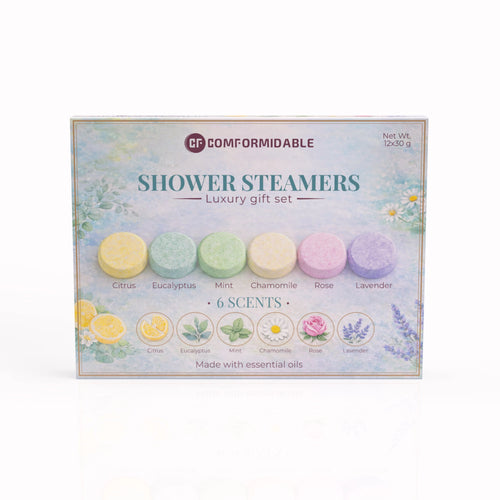
The bathroom as a steam room. Run the shower warm, close the door and let the room fill up. If you want scent with it, put one of our shower steamers with eucalyptus and mint on the shower floor. The tablet fizzes up slowly in the water that splashes over it and fills the bathroom with steam and scent.
Rinsing instead of steaming. With a nasal rinse bottle with rinsing salt you flush out mucus, dust and pollen with a mild saline solution. If it is your first time, read up on how to use a nasal rinse bottle. It saves a lot of mess over the sink. If you already have the bottle, loose sachets of nasal rinsing salt are enough to get you through the winter.
Something for the night. If your nose is blocked mainly in bed, you could try nasal strips. You stick the strip across the bridge of your nose, where it gently lifts the nostrils so you breathe through your nose more easily. Handy on the evenings when you have just steamed and would like to take that feeling into the night.
When to check in with your doctor
An ordinary cold settles within seven to ten days. Call your doctor if your symptoms get worse rather than better after that, if the fever comes back, if you feel a lot of pain or pressure around your cheeks, eyes or forehead, or if you become short of breath. It is also sensible to call for babies who drink poorly because their nose is blocked. Steaming and rinsing are there for comfort, not to take away a complaint that lasts longer than it should.
Frequently asked questions
How often can you steam when you have a cold?
Once or twice a day is enough, in sessions of five to ten minutes. Doing it more often or for longer dries out the lining of your nose, which leaves it feeling gritty and irritated.
Can you put menthol or eucalyptus oil in the water?
For adults that is possible, though it is not necessary; the steam itself does the work. With babies and young children you leave the oil out, because menthol and eucalyptus can irritate their breathing. If you have asthma, talk to your doctor first.
Can a child steam over a bowl?
No. A bowl of boiling water on the table with a child around it is asking for burns. Let the bathroom fill with steam from a warm shower instead and sit in there together for a few minutes.
Which is better, steaming or rinsing your nose?
They do different things. Steaming moistens your nasal lining and makes your nose feel roomier for a while. Rinsing genuinely flushes out mucus, dust and pollen. Many people combine the two: rinsing after a shower, steaming on an evening when nothing seems to shift.
Pick whatever suits your evening, and give your nose some rest this autumn.