Anti-snoring strips, nasal strips, mouth tape, a splint: there is plenty to buy and it all seems to promise the same thing. Yet they work in completely different places in your airway. Which one suits you depends on where the sound comes from, and a few questions will narrow that down.
Below, first a short look at where snoring starts, then an honest comparison of the aids you can try yourself.
What causes snoring?
Snoring happens when air passes tissue that is partly in the way. That can occur in three places, and the difference decides what helps.
- In your nose. Narrow nasal passages, a deviated septum, a cold or hay fever. You notice it because your nose is often blocked during the day too, and you switch to mouth breathing at night.
- In your throat. Slack tissue in the soft palate and throat. More common with age, excess weight, alcohol before bed and sleeping on your back.
- At your jaw. Your lower jaw drops back as you relax, which reduces the space behind your tongue.
Often it is a combination. If the cause is in your throat and you use a nasal strip, you will notice little. That is not a bad product, it is the wrong place.
What you can change yourself
Before buying anything: a few things cost nothing and often already help. Sleep on your side rather than your back. Skip alcohol in the last hours before bed, because it relaxes exactly the tissue you want to keep still. Do not let the bedroom get too dry. And if your nose is blocked by a cold or pollen, rinse it before sleeping with a nasal rinse with rinsing salt, because no aid can clear mucus.
Nasal strips: for snoring that starts in the nose
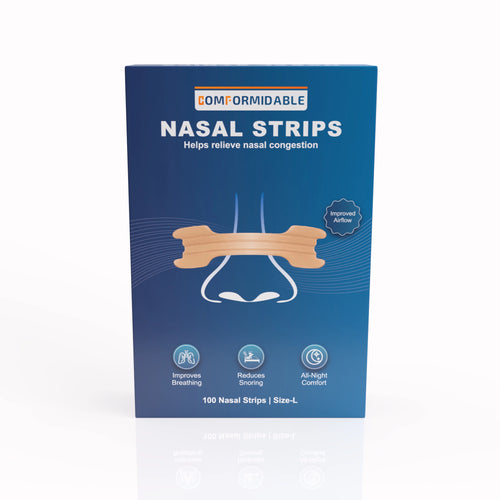
A nasal strip gently lifts the sides of your nose, so you breathe through it more easily. If the cause is in your nose, you usually notice it the first night. If it is in your throat, little changes.
There are three versions. The classic anti-snoring nasal strips stick on the outside and are the firmest. They are dermatologically tested and rated very good by Dermatest®, which covers skin safety. The transparent nasal strips follow the same idea but are less noticeable. And the magnetic nasal strips are a clip without adhesive that you reuse for months, handy for sensitive skin or if you sweat easily.
Mouth tape: when your mouth falls open
If your mouth falls open at night and you wake up with a dry throat, your mouth is taking over the work of your nose. Mouth tape keeps your lips lightly closed, so nasal breathing takes over again.
One important condition: your nose has to be clear. Taping your mouth while your nose is blocked is unpleasant and counterproductive. Many people therefore combine a nasal strip with mouth tape. Start gently, build up over a few nights, and do not use it when you have a cold, feel nauseous or have been drinking.
Mandibular splint: for snoring from the jaw
An anti-snoring splint holds your lower jaw slightly forward, leaving more space behind your tongue. This is the aid for throat and jaw snoring, exactly where nasal strips do nothing.
It is also the one that takes the most getting used to. The first nights your jaw feels stiff and you produce more saliva. If you have jaw complaints, a crown or a bridge, check with your dentist first.
Which one do you choose?
In short: a blocked nose and waking with a dry mouth points to the nose, so start with a nasal strip and possibly rinsing. Waking with a dry throat while your nose is clear points to mouth breathing, so mouth tape. A deep, rattling sound with your mouth closed points to the throat or jaw, so a splint. If you are not sure, an anti-snoring set with several aids is the cheapest way to find out what works for you.
Give each aid a week or two. One bad night says little, because alcohol, a cold or eating late all distort the picture.
Frequently asked questions
What works fastest against snoring?
It depends on the cause. If your nose is blocked, nasal strips help straight away. If your mouth falls open during sleep, mouth tape is the logical choice. Often the combination works best.
Do anti-snoring strips really work?
For snoring that starts in the nose, many people notice a difference, because the sides of the nose get more room. For snoring from the throat or jaw they do nothing. So the question is less whether they work and more whether your snoring starts in your nose.
Can you use nasal strips and mouth tape together?
Yes, and for many people that is exactly the combination that works: the strip keeps the nose open and the tape makes sure you actually use it. Build it up gently and stop if it feels restrictive.
When should you see a doctor about snoring?
If you have pauses in your breathing during sleep, extreme daytime sleepiness, or a suspicion of sleep apnoea. Anti-snoring products are not the answer then.
Are the Comformidable anti-snoring products registered?
Yes. The nasal strips and mouth tape are class I medical devices under the European MDR regulation, registered in EUDAMED.
Do you know by now where your snoring comes from? Have a look at the Comformidable anti-snoring products and start in the right place.